

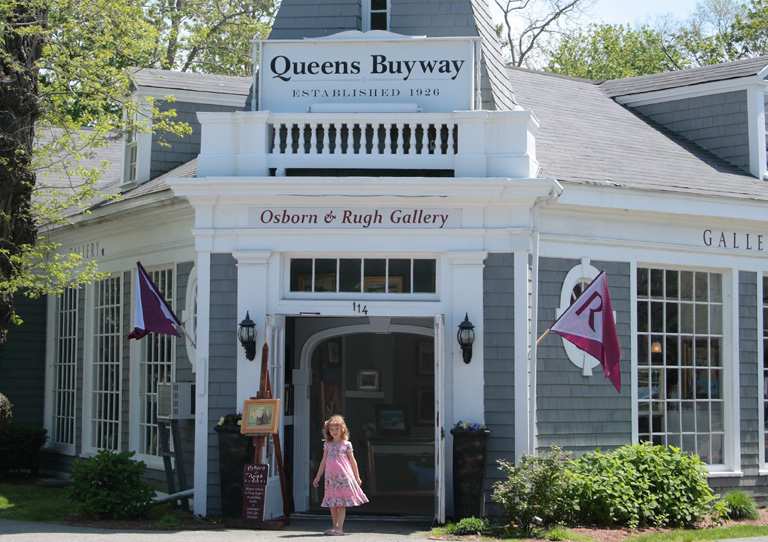
Visit
Located at the historic shopping area of Queen's Buyway near the Village Green in Falmouth, MA (on the corner next to Coffee Obsession).
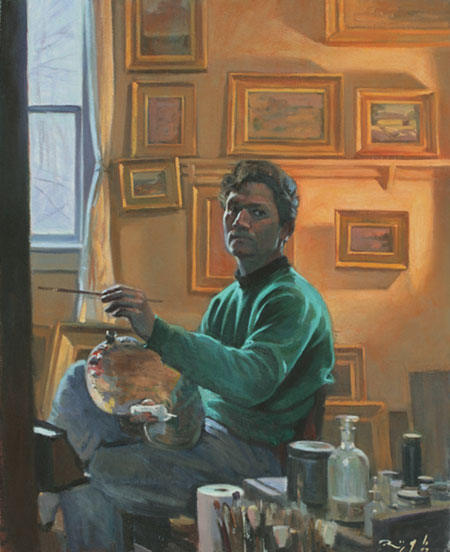
Doug Rugh, CM
The Artist
Doug Rugh, CM has been a full-time landscape, portrait and still life painter since 2000 and has over 35 years experience in the visual arts. Rugh maintains a studio/gallery in Falmouth on Cape Cod with his artist wife, Hillary Osborn.
Landscape, Still Lifes and Portraits
Doug's work ranges from: carefully rendered miniatures to full-size portraits. From studied still-lifes layered with glazes (and hand-mulled paint) to plein air works painted on location and large textural landscapes created largely with palette knives and partly from memory...
The Studio
Doug Rugh, CM (pronounced rü) became a full-time artist using oil paint as a medium in 2000 but for over 30 years has been working in the visual arts. Rugh was awarded the distinction, "Copley Master" in 2006 by the Copley Society (America's oldest nonprofit art association) as a result of juried works and multiple major awards in each of the three areas of landscape, still-life and portraiture. Rugh attended the Maryland Institute College of Art before completing his BFA in 1994 at the Rhode Island School of Design with honors.
Still Lifes
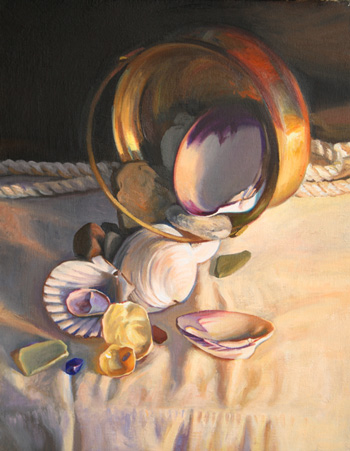
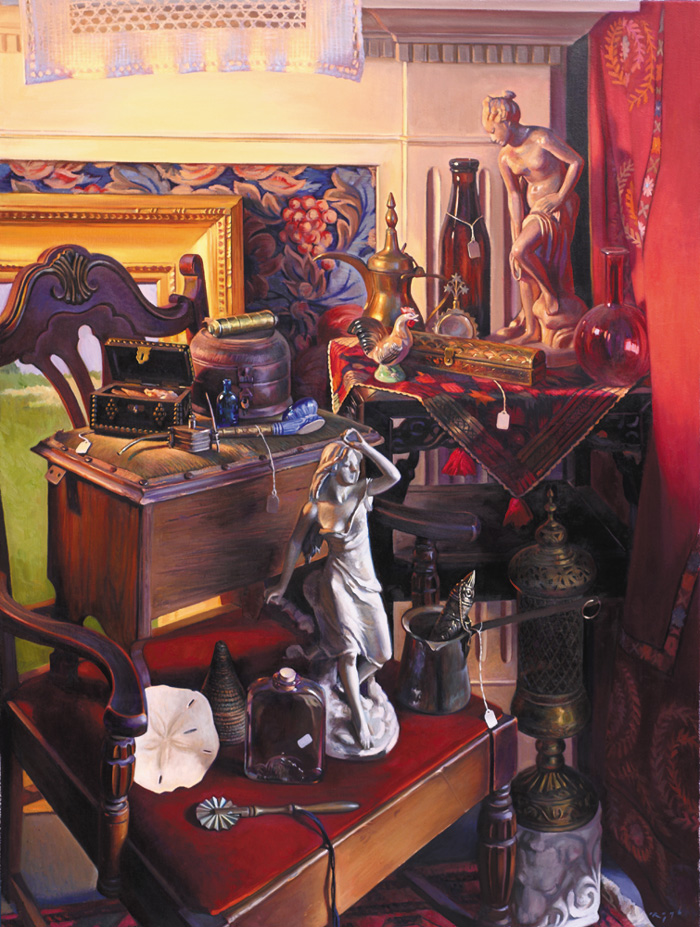
For several years Rugh worked as a scientific illustrator at the Marine Biological Laboratory in Woods Hole, MA where both of his grandfathers did research. This love of direct observation and the technical study of optical effects is carried over into the practice of carefully observed still life painting. The artist has done much work with hand-mulling his own pigments into paints and experimenting with various mediums and techniques. This study began at the Schuler School of Fine Arts in Baltimore, an atelier based on the French academies of the 19th century, which specializes in materials and methods of the old masters.
Landscapes
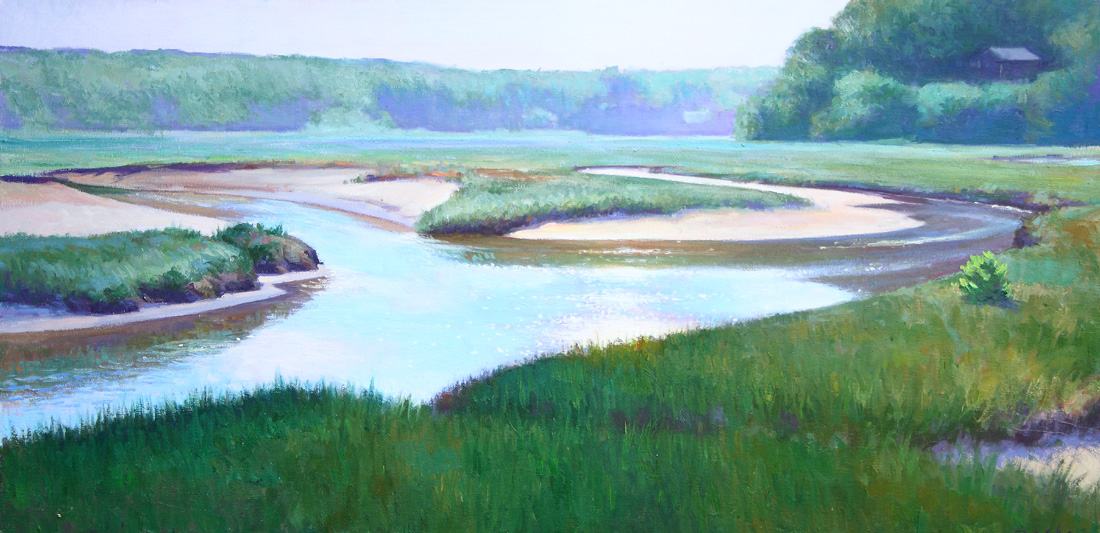
The artist is fortunate enough to live in a beautifuI environment and in the warmer half of the year when Rugh is not at the easel in the studio/gallery, he can be found out on location painting from the beauty of Cape Cod. Often these field studies are expanded into larger paintings in the studio.
Portraits
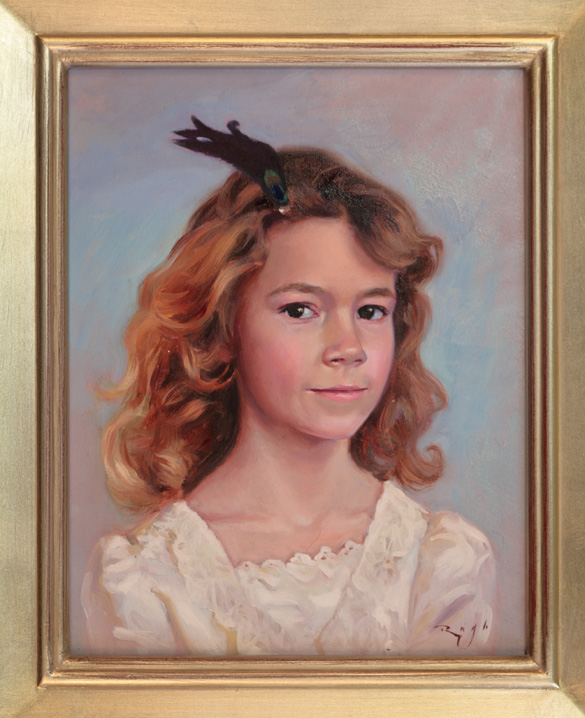
To develop his portrait skills the artist worked regularly from live models in-between portrait commissions and the artist estimates that he has had about 2000 sittings (and counting) with live models. Covert Ops Rugh's "covert" paintings are done with a small paint box disquised as a laptop using a quick "alla prima" method and relying on years of training to do small likenesses from quickly moving targets. The artist says, "I especially enjoy painting people this way. It is very artistic and it's what we as artists should strive for: to paint real people in interesting light, in candid poses and natural settings. These studies add depth to our studio paintings and commissions. The artist helps us to see the beauty that is all around us." In the same vein, Rugh has been studying interiors at Highfield Hall. These oils will be exhibited at the historic mansion in Fall 2014.
Books
Rugh has two ebooks available through Amazon and Barnes and Noble. The Artist's Conundrum is his oil painter's journal and includes many paintings along with observations and anecdotes from an artist's life at work and play. Eddie in My Pocket is a picture book that is unusual in that it is image based - the story was borne from the oil paintings. Earlier in his career Rugh worked as a freelance illustrator creating original works of art for such clients as: Barnes and Noble, Microsoft, Prudential, The New York Times, Reader’s Digest, Newsweek and The Washington Post. Commissioned work appeared regularly in print, on book and magazine covers as well as in numerous publications. Eddie in My Pocket was a chance for the art to drive the content.
A Special Partnership
For the last 13 years Rugh has partnered with his wife, the artist Hillary Osborn, with whom he has shared a special art relationship. The artists take turns manning a studio and gallery: the Osborn and Rugh Gallery. They share an aesthetic philosophy that places major importance on direct observation from Nature as a starting point for artistic decisions made from the artist's imagination. The couple feel that landscape painters need to spend their time in the field working/studying from an ever-changing environment rather than inside copying fixed 2-dimensional snapshots. That portrait artists need to work from living people and though nowadays subjects rarely have time to sit at length an artist's training must be from direct observation. Rugh does uses photographic reference materials for portrait commissions but draws from hours of working directly from life. Paintings range in price by size from $500 to $29,000.
Landscape Commissions
The artists creates landscapes from the surrounding areas through the outdoor season and work up larger studio paintings in the gallery...
Portrait Commissions
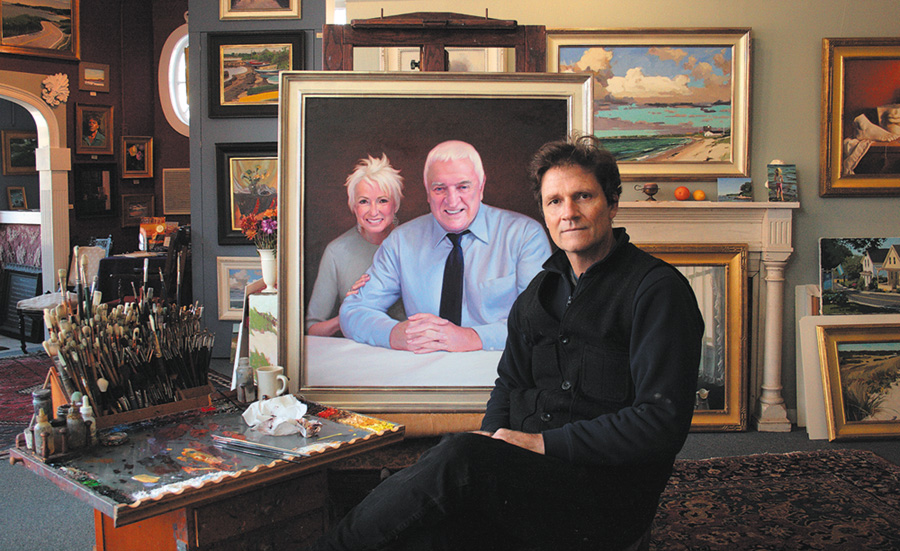
Doug Rugh, CM, has been painting portraits in oil for over 30 years and has had over 2,000 live sessions with a model...
Standing in Front of a Painting
“We’ve devoted our careers to creating original works of art because we are continually amazed with what can happen at the easel..."
Standing in Front of a Painting
“We’ve devoted our careers to creating original works of art because we are continually amazed with what can happen at the easel. We believe that nothing can compare to standing in front of an oil made with an artist’s eye and a skilled hand. As our world gets increasingly more digital, fine art becomes a remnant of a time when we still made things by hand. You don’t have to understand composition or know what kind of tricks the artist used to appreciate the magical illusion that happens when a canvas covered with pigment takes on a life of its own. We don’t think you can see it in print or a monitor so we hope that you can take a few minutes to stop in and see some of our paintings in real life.” -Doug Rugh
Osborn and Rugh believe that it is important for artists to study directly from life and on location to understand visual nuances of ever changing light and develop a keen eye and have spent many years painting on location and from live models and studying the craft and aesthetics of oil painting.
Talking Points
When you need to convince your spouse that you need an Osborn or Rugh painting...
Collecting and Oil Painting
How to Convince Your Significant Other That You Need an Osborn or Rugh Painting
It should be obvious that you deserve that painting you’ve picked out but prioritizing for your happiness may not be one of your spouse’s strengths. This lapse, of course, is surely a fleeting oversight because if hanging the right painting in your home is all that it takes to give you a little joy why wouldn’t your significant other jump at the opportunity. This is a classic win-win situation: you become happy and by extension so does your other half. A simple prodding: “Honey, I just need it. I can’t explain why,” should be enough (goodness knows that you’ve earned it after all these years) but if it’s not, I humbly offer these talking points to help maintain your matrimonial bliss (while you simultaneously have your needs met):
“I was at the gallery today and I was thinking, ‘Wouldn’t it be nice to be surrounded by art like this' and then I realized that I can be. That we can be. And that you and I can live a life in art together.”
Stand in front of the painting that you want in the gallery and without looking away from it say, “I always pick things for the house. Why don’t you pick this time?”
“They say real connoisseurs build houses around art. We’re real connoisseurs aren’t we sweetheart?”
“We have to get rid of those prints and get some original paintings. What is this, a motel?”
“At this point what else could Hillary and Doug do? They’ll either have long (and I mean long) careers or they’ll die early from hard living. Either way, prices are only going up-up-up and we need to get in now!”
“How often do you see something that just strikes you as beautiful? Never? Well I just did and I have the perfect place for it.”
“What do I want for my birthday (anniversary/Christmas/mother’s day/father’s day/birthday)? Oh, I don’t know.” - Look up at an empty area on the wall and gently touch the wall. - “I was at the gallery again today.” Make sure you mention the title and size but don’t say any more: just plant a seed of desire. If it doesn’t take root, send an email to the gallery asking about the painting and “accidently” copy the reply to your significant other. He/she will see that you have written, “I love it, but I just couldn’t ask for it.”
“You are a powerful and important man (woman) but our art doesn’t reflect that.”
“The house and everything in it is almost perfect, just what we always dreamed of and yet I can’t help thinking that we’ve left the walls undressed; naked almost. Imagine how those paintings would make the room sing. The only little pang of emptiness I feel is when I look at our sad, bare walls. Come to think of it, it’s like living in a jail cell.”
“They say that paintings are like windows on to a world of one’s own choosing. Now, this is what we’re going to do: either buy that house overlooking __________________ [Pick your favorite spot in the world and don’t hold back.] or we’re going to get a painting of it. You decide.”
“Remember that painting that I loved where you said ‘we should think about it’ and then it was gone when I went back to get it? I’ll never find anything like that again: it was a one-of-a-kind. I found another one I like. What do you think I should do about this one?”
Wait until your spouse has wronged you. Utilize the silent treatment for a few days and when he/she is sufficiently receptive, and without making eye contact, declare, “I want a painting.” Just let it hang in the air until he/she says, “Which painting?” Turn and gently place your hand on their arm and then give them specifics.
“Years from now we’ll be out to dinner and reminiscing: ‘We got that painting for what this meal costs and now we could sell it and buy the restaurant.’”
“We’ll have the Hendersons over and they’ll see that beautiful painting over the mantle. They’re so competitive; always trying to one-up us but for just this once we can be the ones pitying them.”
“In Fifteen years their work has appreciated more than 850%. Imagine what the value of their work will be 20 or so years from now when they’re not able to lift a brush. It’s a demand and supply thing and I demand you supply me a painting now!”
“We always said we would grow old together. They say that oil paintings get better with age too. Just like us! Let’s you and I grow old together with this painting and then leave this token for others to remember us by.”
“Life is short, do we really want all our dollars tied up in risky investments? We should have our investments in hard assets and on display for all to enjoy.”
Glaring: “You meant well honey but when I said I hoped to have more beauty and culture in my life I did not mean to get a larger flat screen TV. Next time pay attention. Please.”
“I’ve been looking for a hobby that’s a good fit for me and I was reading about art patrons in the olden days and how they surrounded themselves with art and knew all the artists of the day and as I was reading I realized that that’s it! That’s me! That is who I am and could be. It just feels right: like it’s my purpose in life. I just wanted to give you a head’s up.”
“Wouldn’t it be nice to leave our (grand) children artwork to remember us by. They could use a little sophistication, that’s for sure.”
Or don’t beat around the bush: Wait until your spouse has caused some undue trouble, tear up these feeble recommendations and use the credit card freely. You deserve it!
-Doug Rugh
DvD and eBooks
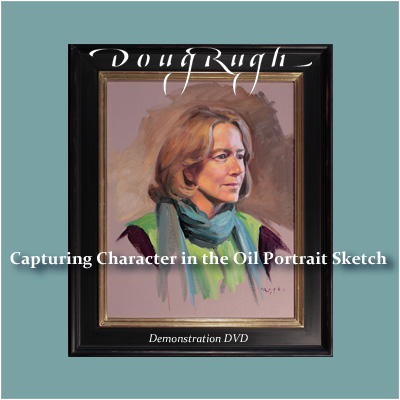
Instructional Portrait Painting DvD, Oil Painter's Journal (eBook), and Eddie in my Pocket (picture book - eBook) all by Doug Rugh. The artists also offer original figure drawings and small oils on paper...
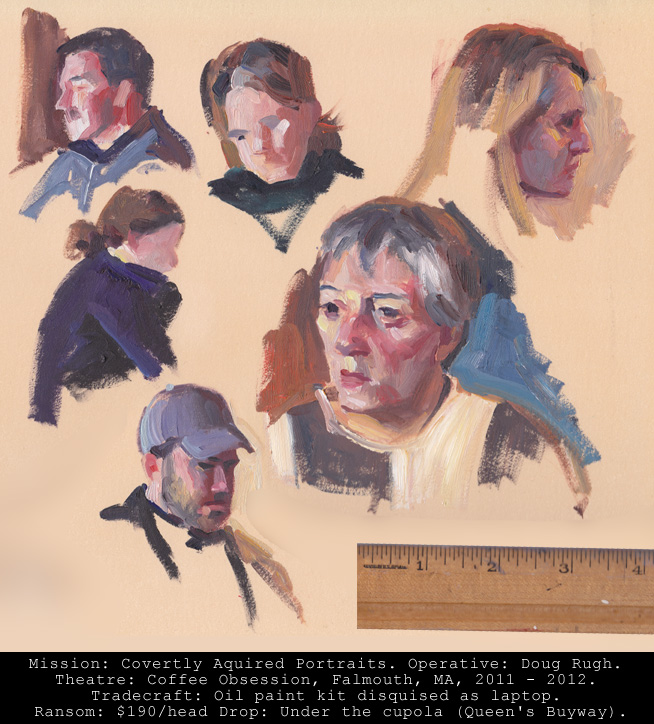
Covertly Aquired Portraits
In the field, stealth operative Doug Rugh [redacted] aquired personality profiles without the knowledge of the marks. These assesments are provided as visual data. Material is held ransom until bounty is paid...
Targets Aquired »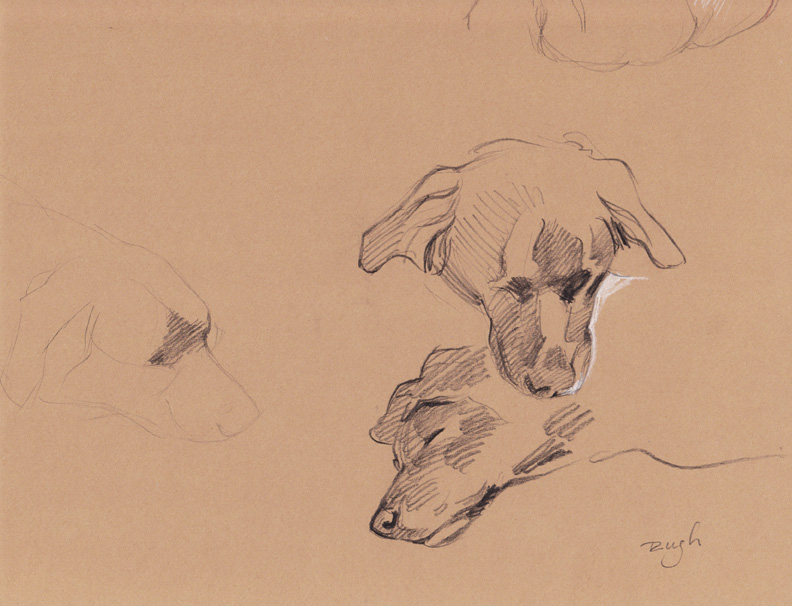
Works on Paper
Original signed studies and sketches, often figurative, in charcoal, gouache, conte, pastel and watercolor...
View Artwork »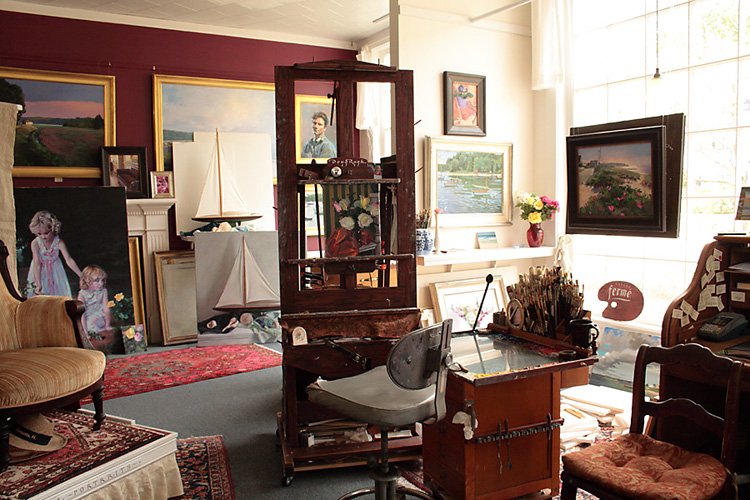
Contact
Contact the artist or subscribe to the occasional newsletter...